

Research Seminar
02 March 2023, 17.00, at the Swedish Institute of Classical Studies in Rome and on ZOOM
– LINK
Micheal Frost
”Scandinavian Links in the Late Middle Ages”
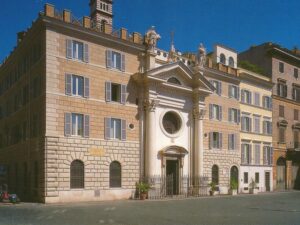 Contact between the Nordic world and Rome increased markedly during the late mediaeval period due to a surge in pilgrim traffic, closer diplomatic ties and the centralisation of church business at the papal curia, to the extent that from the mid-fourteenth century onwards there was a permanent Scandinavian colony in the city. At the heart of this community was St Birgitta’s Hospice, now known as the Casa di Santa Brigida, but Nordic expatriates were also spread across a number of other locations in Rome. The reasons they came to the city in the first place were multifarious. Some, such as the Birgittine monks who ran St Birgitta’s Hospice and the ’procurators’ who acted as resident ambassadors to the Holy See on behalf of the Scandinavian monarchs, were permanent or semi-permanent residents, but there were also short-term visitors in the form of pilgrims, special envoys sent by the monarchs or other prominent individuals to discuss specific business with the pope, and also private supplicants to a department of the curia known as the Apostolic Penitentiary. While all these aspects of the late mediaeval Scandinavian presence in Rome have been discussed individually in previous scholarship, there has as yet been no attempt to draw these different strands together to give a holistic view of this fascinating community, which is what I seek to accomplish with my present project.
Michael Frost graduated from the University of Cambridge in 2014. He received his PhD from the University of Aberdeen for a study of the episcopate in the North Atlantic islands subject to the Norwegian crown during the late mediaeval period. He was subsequently awarded a postdoctoral scholarship through the Bernadotte Programme for the project ”The Backgrounds and Early Careers of Swedish Bishops in the Late Middle Ages” at the University of Gothenburg, in which he explored how the characteristics and career path of a typical bishop varied between the different dioceses in Sweden and Finland, and how these developed over the course of the Kalmar Union period.