

OPEN LECTURE
16/12 at 18.00
Johan Vekselius: ”Self-Control and Emotional Excess in Graeco-Roman Antiquity: Plutarch’s Cato the Younger in Grief”
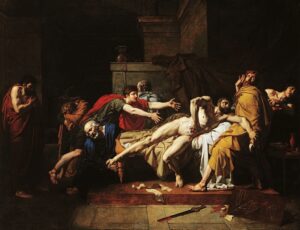 This paper examines Plutarch’s account of Cato the Younger’s extravagant mourning for his half-brother Caepio, an episode that sits at odds with both late republican ideals of visible self-control and Cato’s later image as a Stoic exemplar. By tracing the chronological development of emotional expectations—from republican norms articulated by Cicero, through early-imperial negotiations of grief in Seneca, Tacitus, and the imperial household, to the Flavian and Antonine embrace of conspicuous mourning in Statius, Pliny, and Herodes Atticus—the paper shows that restraint and expressive excess formed two parallel and durable models of elite behaviour. Plutarch’s scene at Aenus becomes intelligible only within this dual framework: Cato’s grief is neither a simple lapse nor a contradiction, but an early instance of how elites could mobilise both paradigms. The episode thus provides a lens for reading emotional performance across Greek and Roman antiquity.
Johan Vekselius is an ancient historian and political scientist specialising in Roman political culture and the history of emotions. His research focuses in particular on tears, mourning, and emotional display in elite contexts, with current work examining self-control as a normative and performative ideal in the Graeco-Roman world. His broader research interests include ancient and modern populism, museology, and the reception of the ancient world in games.