

Tirana: Albania’s Capital Transformed by Italian Architects in the 1920s–1940s
WORKSHOP at the Swedish Institute in Rome, December 12, 2023
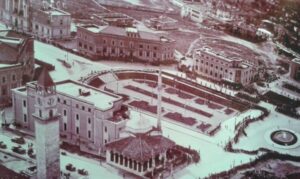 During the first half of the 20th century Italian architecture and Italian architects were widely influential in many parts of the world, partly because of Italy’s long tradition as a major authority in architectural scholarship, partly because of political connections during the period. This can be exemplified indirectly by the Nordic countries, more directly in eastern and northern Africa, and not least so in the more nearby case of Albania. The Swedish Institute in Rome has been involved in previous research on this topic, mainly regarding Sweden, Libya and Eritrea. This seminar deals with the Italian early 20th century architecture in Albania, especially its capital Tirana, treated both as a comparative and a unique case.
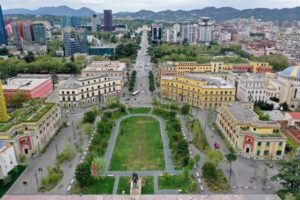 The Italian influence and later occupation of Albania from the 1920s till 1943 made a significant imprint on the central part of the new capital of Tirana, both planning and the number of important buildings with a high level of architectural ambition. The seminar analyses the character of Tirana’s architecture from this period – the impact of Italian, but also of colonial traces, as some of the most prestigious architects in Tirana – Brasini, Di Fausto and Bosio – had earlier experiences in the Italian colonies. The study of Tirana broadens the discussion of the Italian architectural heritage in the Mediterranean region, with its references both to the Roman Empire and to the international claims of contemporary modernism. Another topic is to examine to what extent the fascist rhetoric in architecture was implemented in Tirana’s new official buildings for the fascist party in the late 1930s. The project also explores the present conditions of this heritage, still dominating the architectural identity of Tirana.
Most welcome!
To participate, please register at eventi@isvroma.org
Click to download the PROGRAMME