

Rubina Raja – A World of Local Cultures in a Roman Sea: The Rise of Urban Landscapes in the Near East
A World of Local Cultures in a Roman Sea: The Rise of Urban Landscapes in the Near East
December 4 – 6:00pm
Istituto Svedese di Studi Classici a Roma
Via Omero, 14
00197 Rome Italy
This lecture turns to the rapidly expanding city centers of the first three centuries of the Roman period. These grew fast and were embellished with the monumental buildings that we know from the core of the Roman Empire: temples, theatres, bath buildings, hippodromes, colonnaded streets. These monuments are well known, but not always in context. Here we look at examples, considering differences and similarities from region to region as well as wider urban settings—including the lack of knowledge about domestic housing. Urban epigraphic habits are brought into play to examine ways in which local cultures interacted with growing Roman influence and negotiated having become a more integrated part of an expanding imperialistic empire.
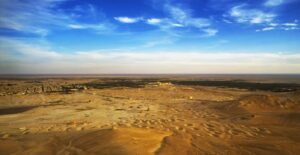
The Thomas Spencer Jerome Lecture Series is among the most prestigious international platforms for the presentation of new work on Roman history and culture. The Jerome Lectures are delivered at both the American Academy in Rome and the University of Michigan. Rubina Raja, professor of classical archaeology and art and centre director of the Danish National Research Foundation’s Centre of Excellence for Urban Network Evolutions at Aarhus University in Denmark, will give the lectures this year.
Rubina Raja will present three lectures and a seminar focusing on the rich and complex urban cultures in the Roman and late antique Near East but also make excursions to earlier and later periods, including those of the Hellenistic and early Islamic times.
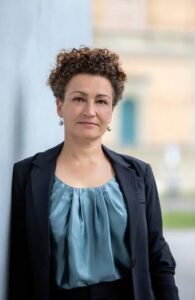 Rubina Raja, a distinguished classical archaeologist, completed her MSt and DPhil at Oxford University, following studies in Copenhagen and Rome. After postdoctoral roles in Hamburg and Aarhus, she joined Aarhus University as an associate professor in 2009. Six years later she became the first female professor of classical art and archaeology in Denmark. She also directs the Danish National Research Foundation’s Centre of Excellence for Urban Network Evolutions, focusing on the Eastern Mediterranean’s urban and societal developments from the Hellenistic to medieval periods.
Her groundbreaking fieldwork in Palmyra, Jerash, and Rome has illuminated ancient urban networks, earning her prestigious awards like the Humboldt Foundation’s Bessel Prize and the Royal Danish Academy’s Silver Medal for the humanities. A dedicated mentor and advocate for the humanities, Raja holds multiple leadership certifications and regularly engages in public outreach. In 2023, she was a visiting fellow at Oxford’s All Souls College, continuing to advance high-definition archaeological research.
This event, to be presented in person at the Academy, is free and open to the public. Please register in advance to attend in person. The lectures will not be streamed on Zoom.